Invisalign vs Braces: How Long Does Treatment Actually Take?
Comparing Invisalign vs braces for treatment time? Enclave Dental in Lake Mary, FL breaks down average timelines, compliance factors, and what really determines how long your orthodontic treatment will take.
When patients come to Enclave Dental in Lake Mary, FL to discuss straightening their teeth, one question comes up almost every single time: how does treatment time compare between Invisalign and traditional braces — and is the difference actually significant? The answer isn't as simple as a single number. Treatment time in the Invisalign vs braces debate depends heavily on the complexity of your case, your compliance, and which system your provider recommends. This guide walks through everything that affects your timeline so you can make a confident, informed decision.
How Long Does Invisalign Treatment Take on Average?
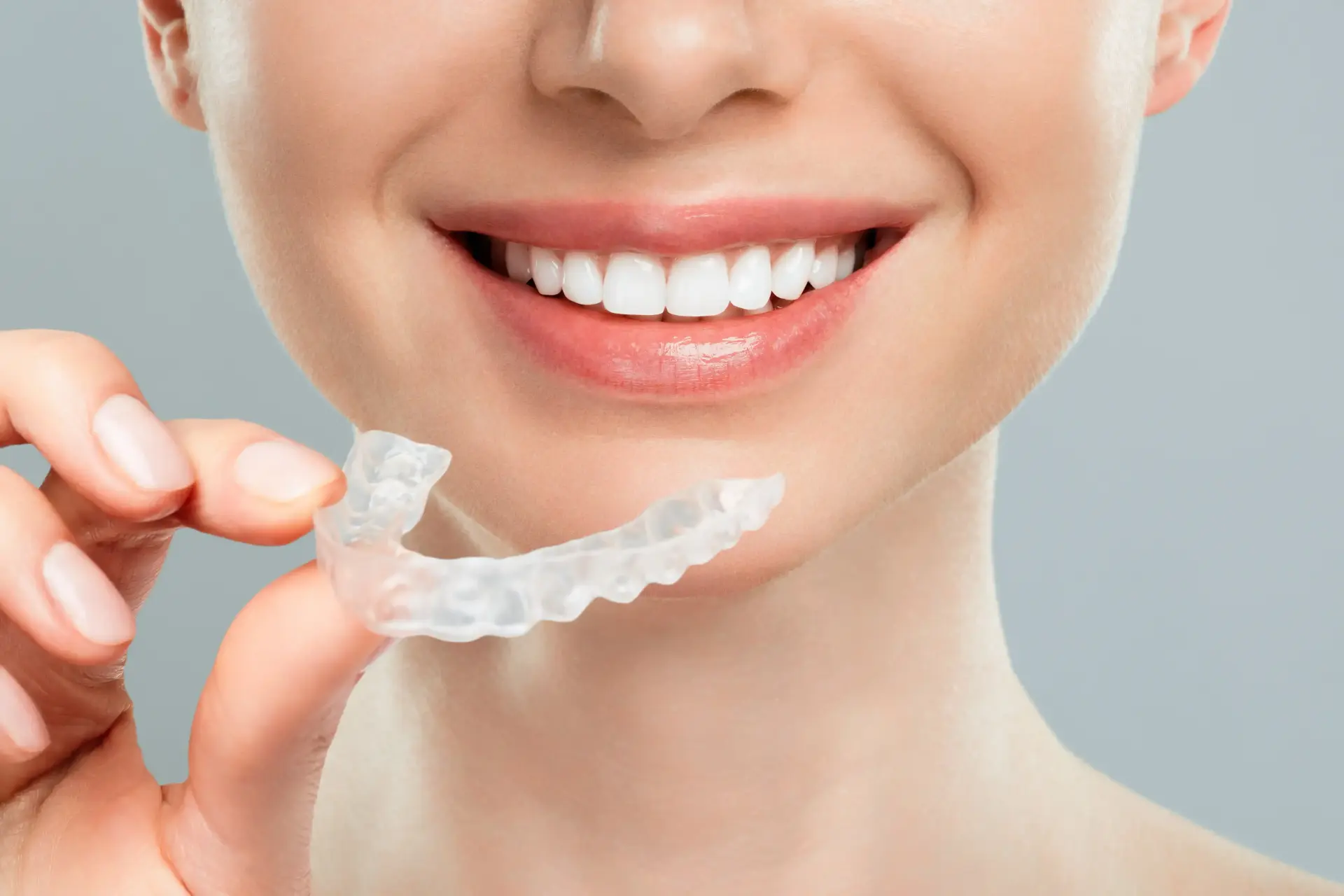
For most adults and teens, Invisalign treatment typically takes between 6 and 18 months. Mild cases — minor crowding, small spacing issues, or slight rotations — may resolve in as little as 6 months. Moderate cases with more significant tooth movement typically fall in the 12-month range. Complex cases involving significant bite correction or severe crowding may extend to 18 months or beyond.
Invisalign Go, a limited edition of the full Invisalign system designed for mild anterior cases, is often completed in 6 months or fewer. If your smile concerns are concentrated in the front teeth and your bite is already healthy, you may be a candidate for this accelerated option.
How Long Do Traditional Braces Take?
Traditional metal or ceramic braces typically require 18 to 24 months of wear for most patients. Complex orthodontic cases — severe crowding, significant overbite or underbite correction, jaw alignment issues — may extend treatment to 30 months or longer. Braces apply continuous force 24 hours a day, seven days a week, which gives orthodontists precise control over tooth movement. This constant pressure is one reason braces are sometimes faster for complex cases.
If you have a significant crooked teeth concern or a severe bite issue, your provider may recommend braces as the more reliable option for achieving your goals on a predictable schedule.
What Factors Lengthen Invisalign Treatment Time?
Several variables can push your Invisalign timeline beyond the initial estimate:
- Case severity: More complex tooth movements — rotations, torque, significant bite correction — require more aligner stages and more time.
- Attachments: Small tooth-colored bumps bonded to teeth help aligners grip and move teeth in precise directions. Cases requiring many attachments may involve more refinement stages.
- Compliance: This is the single biggest variable. Invisalign aligners must be worn 20–22 hours per day. Every hour they are out is an hour your teeth are not moving toward the goal.
- Refinements: If teeth do not move exactly as planned — which is common — your provider may order a new set of refinement trays, adding weeks or months to treatment.
- Skipped or lost trays: Missing an aligner stage can cause teeth to shift back, requiring the provider to reorder trays.
What Can Speed Up Invisalign Treatment?
On the other end, certain conditions and habits may help you finish on the shorter side of your estimate:
- Mild cases: If you only need minor tooth movements, your plan may involve fewer aligner stages from the start.
- 22+ hours of daily wear: Patients who are diligent about wearing aligners consistently tend to progress on schedule or even slightly ahead.
- Advancing trays on schedule: Following your provider's guidance on when to move to the next tray — usually every 1–2 weeks — keeps momentum going.
- AcceleDent or Propel: Some providers offer adjunctive devices that may help accelerate tooth movement. Ask Dr. Shah whether these are appropriate for your case.
- Invisalign Go: For candidates with mild front-tooth alignment concerns, this streamlined system is designed for a shorter treatment course.
Can Invisalign Fix an Overbite, Underbite, or Crowding as Fast as Braces?
This is one of the most common follow-up questions in the Invisalign vs braces conversation. The short answer: it depends on severity.
For mild to moderate overbites, Invisalign with precision bite ramps or mandibular advancement features can address the issue effectively, often in comparable time to braces. For underbites and severe skeletal discrepancies, braces — sometimes combined with oral appliances — may deliver faster, more controlled results. For crowding, both systems work well for mild to moderate cases. Severe crowding with extractions often moves slightly faster with braces because of the constant 24/7 force application.
During a consultation at Enclave Dental, Dr. Shah will evaluate your specific bite and alignment concerns with digital imaging to give you an accurate comparison for your particular case.
The Compliance Factor: What Happens If You Don't Wear Them Enough?
Unlike braces, which are fixed to your teeth and require no cooperation on your part, Invisalign depends almost entirely on your commitment. Patients who consistently wear aligners for the recommended 20–22 hours per day typically stay on schedule. Patients who routinely wear them for only 14–16 hours per day may find their treatment extending by months.
Common compliance pitfalls include removing aligners during work meetings, forgetting to put them back in after meals, and sleeping without them. Even two or three extra hours out per day adds up quickly. If you are unsure whether you can meet the wear-time requirement, discuss this honestly with Dr. Shah during your consultation — it is a critical factor in deciding which system is right for you.
Invisalign vs Braces Cost: Does Faster Mean More Expensive?
Cost is tightly connected to treatment time in this comparison. Invisalign typically ranges from $3,000 to $8,000 depending on case complexity and geographic area. Braces tend to run $2,500 to $7,500. For simple cases where Invisalign treatment time is comparable to or shorter than braces, the investment is often similar. For complex cases where Invisalign requires multiple refinement rounds, the total cost may creep higher than a comparable braces treatment.
It is also worth noting that Invisalign refinements are typically included in your provider's quoted fee — though this varies. Always confirm what is covered before starting treatment. If a full smile makeover is on your radar, aligning teeth first with Invisalign can set the stage for subsequent cosmetic work.
Which Is Right for You: Invisalign or Braces?
Neither system is universally faster or better. The right choice depends on:
- The complexity of your alignment and bite issues
- Your lifestyle and ability to comply with wear-time requirements
- Whether aesthetics during treatment matter to you
- Your budget and insurance coverage
- Your provider's clinical recommendation based on digital scans and x-rays
For many adults in Lake Mary, Invisalign's near-invisibility and removability make it the preferred choice even if treatment runs a few months longer than braces. For teens or patients with complex bite issues, braces may offer more predictable timing. The only way to know for certain is a thorough evaluation with a qualified provider.
Frequently Asked Questions
How long does Invisalign take for mild crowding?
Mild crowding cases typically take 6–9 months with Invisalign when the patient maintains recommended wear time. Invisalign Go may be an option for very minor anterior crowding with an even shorter timeline.
Is Invisalign faster than braces?
For mild to moderate cases, Invisalign can be comparable in speed or even faster than braces. For complex cases requiring significant bite correction or severe crowding, traditional braces may be more time-efficient because they exert continuous 24/7 force.
What happens if I only wear Invisalign 10 hours a day?
Wearing aligners far below the recommended 20–22 hours per day will likely stall your tooth movement. Teeth may shift back toward their original position, and your provider may need to order refinement trays or re-plan your treatment entirely, adding significant time and potentially cost.
Can Invisalign fix an overbite?
Yes, Invisalign can address mild to moderate overbites using precision bite ramps and mandibular advancement features. Severe skeletal overbites may still require braces or, in some cases, surgical intervention.
Do I still need a retainer after Invisalign?
Yes. After active treatment ends with any orthodontic system, retainers are required to maintain results. Most providers recommend wearing retainers full-time initially, then nightly long-term. Skipping retainers is the most common reason for teeth shifting back.
How often do I change Invisalign trays?
Most providers instruct patients to change to the next tray every 1–2 weeks, depending on the tooth movement required and how well the current tray fits. Dr. Shah will provide your specific tray-change schedule during treatment planning.
Does Invisalign hurt less than braces?
Many patients report that Invisalign causes less discomfort than braces, particularly because there are no wires or brackets to irritate soft tissue. Some pressure or soreness when switching to a new tray is normal and typically subsides within 24–48 hours.
Can adults get Invisalign, or is it mainly for teens?
Invisalign is highly effective for adults. In fact, the majority of Invisalign patients are adults. The system is designed to fit into professional lifestyles, and aligners are nearly invisible during daily wear.
Will my insurance cover Invisalign?
Many dental insurance plans with orthodontic benefits apply those benefits equally to Invisalign and braces. Coverage typically ranges from $1,000–$2,000 of the total cost. Enclave Dental's team can help you verify your specific benefits before starting treatment.
How do I get started with Invisalign at Enclave Dental?
The first step is a consultation with Dr. Shah. She will take digital scans of your teeth, evaluate your bite, and show you a ClinCheck simulation — a 3D preview of how your teeth are projected to move over the course of treatment. From there, you will receive a clear timeline and cost estimate.
Ready to Find Out How Long Your Invisalign Treatment Would Take?
Every smile is different, and the only way to get an accurate timeline is a personalized evaluation. Book an Invisalign consultation at Enclave Dental in Lake Mary, FL and Dr. Shah will walk you through a custom treatment plan — including a realistic timeline based on your specific teeth and goals. Call us at (407) 323-1010 to schedule your visit.