Consultation
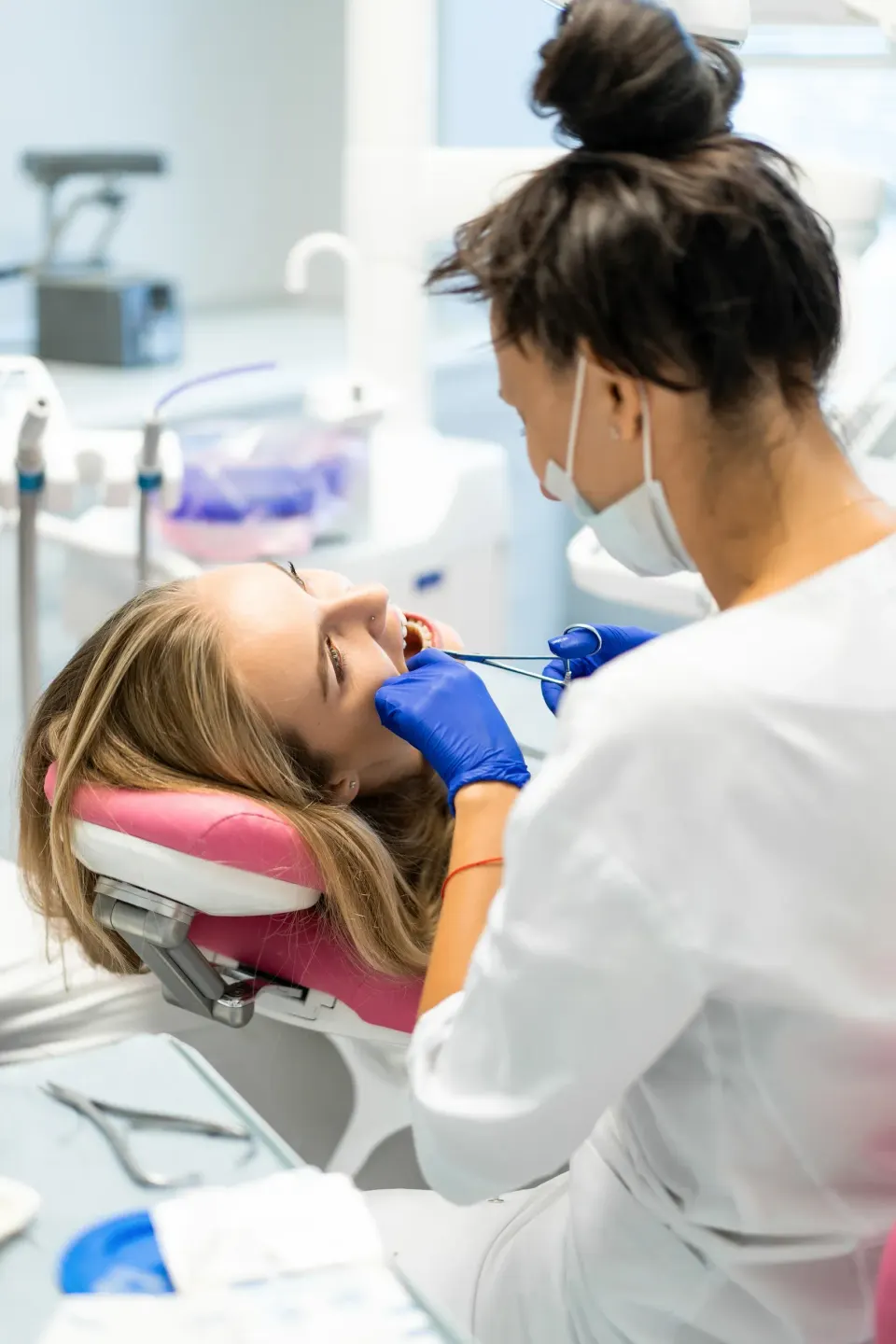
Dr. Shah reviews your medical history, takes 3D CBCT scans, and designs your individualized implant treatment plan.

Permanent Tooth Replacement
More Than a Cosmetic Concern
When you lose a tooth, the impact goes far beyond the gap in your smile. Chewing becomes difficult or painful, forcing you to avoid favorite foods. Speech patterns shift as your tongue and lips adjust around missing structure. Neighboring teeth begin to drift into the empty space, altering your bite and creating alignment problems over time. Perhaps most significantly, the jawbone beneath the gap begins to resorb — losing density at a rate of roughly 25% in the first year alone — causing the sunken facial appearance many patients describe as "looking older." Traditional bridges and dentures address surface-level aesthetics but do nothing to stop this underlying bone loss.
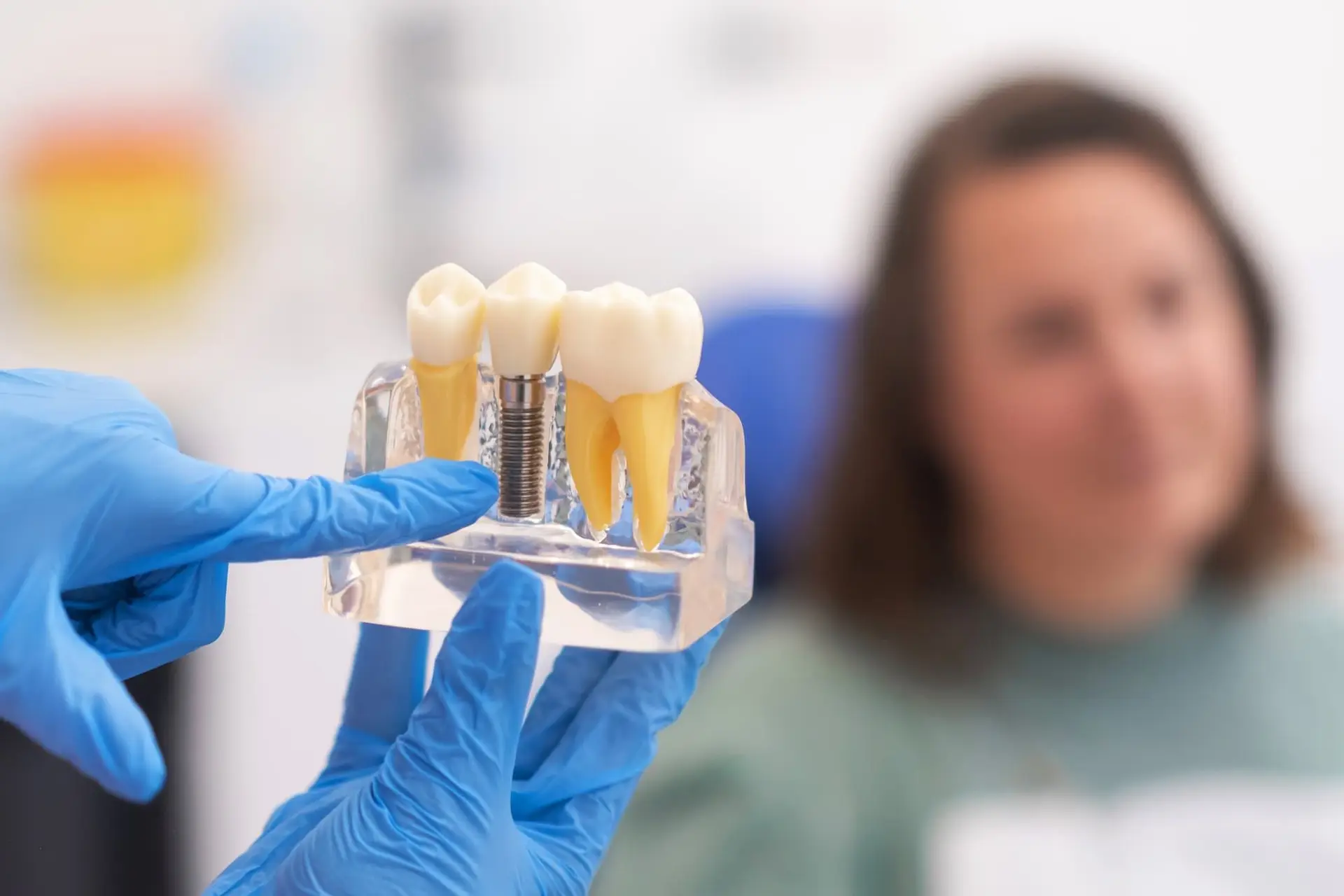
Dental implants are the only tooth-replacement solution that addresses the problem at its root — literally. A titanium post is surgically placed into the jawbone, mimicking the function of a natural tooth root. As it heals over the following months, the implant fuses with the bone through a process called osseointegration, halting further resorption and actually stimulating healthy bone maintenance. A custom porcelain crown is then secured on top, indistinguishable from surrounding natural teeth in color, shape, and feel. The result is a complete, fully functional tooth that you brush, floss, and use exactly like the original — with no removal required, no adhesives, and no dietary restrictions.
Titanium-Root Tooth Replacement Technology
A dental implant is a small titanium post surgically inserted into the jawbone to replace the root of a missing tooth. Titanium's unique biocompatibility allows it to fuse directly with living bone — a process known as osseointegration — creating a stable, permanent anchor. Once healed, a connector piece called an abutment is attached to the implant, and a custom-fabricated porcelain crown is secured on top. The finished restoration is virtually indistinguishable from a natural tooth in function and appearance.
Implants are FDA-cleared and supported by decades of clinical research. Unlike dental bridges, which require grinding down healthy neighboring teeth for support, implants are entirely self-supporting. Unlike dentures, which rest on the gum surface and can shift, implants are fixed in the bone — they do not move, slip, or require adhesives. Because they replace the tooth root as well as the crown, implants are the only restorative option that preserves jawbone density long-term.
Built to Last a Lifetime
With proper care, implants last 20+ years — often a lifetime — unlike bridges or dentures
The only restoration that stimulates bone to prevent the facial collapse caused by tooth loss
Custom porcelain crown matched to your adjacent teeth — no one can tell the difference
Eat steak, apples, and corn on the cob again — implants bite and chew like real teeth
Brush and floss normally; no soaking, adhesives, or special cleaning routines required
Unlike bridges, implants require no alteration to healthy adjacent teeth for support
Comparing Tooth Replacement Options
| Treatment | How It Works | Jawbone Preserved | Adjacent Teeth | Longevity | Maintenance | Best For |
|---|---|---|---|---|---|---|
| Dental Implant | Titanium post fused to bone; porcelain crown on top | Yes — stimulates bone like a natural root | None — fully self-supporting | 20+ years (often lifetime) | Brush and floss normally | Single/multiple missing teeth; bone preservation priority |
| Dental Bridge | Crowns cemented to ground-down adjacent teeth | No — bone loss continues beneath gap | Yes — healthy teeth permanently altered | 10–15 years average | Brush normally; floss threader under bridge | 1–3 adjacent missing teeth; strong neighboring teeth |
| Partial/Full Denture | Removable appliance resting on gums or clasped to teeth | No — bone resorption accelerates under denture | Partial: clasps on neighbors; Full: none | 5–10 years before reline/replacement | Daily removal, soaking, adhesive application | Multiple or all missing teeth; cost-sensitive patients |
Dental Implants in Lake Mary
Dental Implants in Lake Mary
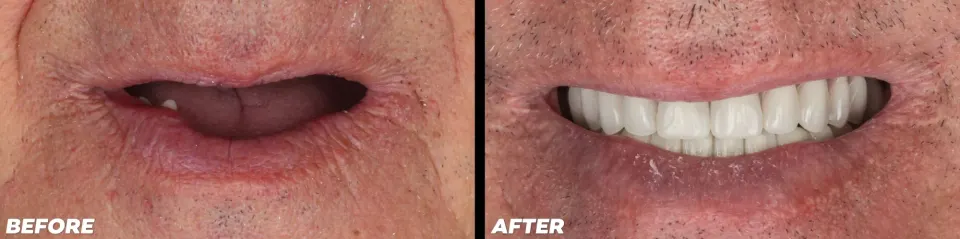
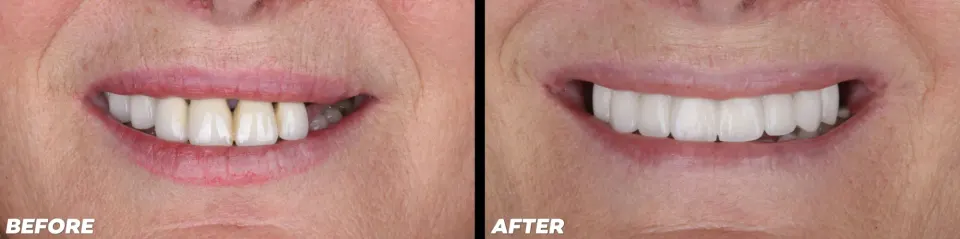
Our dental implant patients typically notice an immediate improvement in smile completeness and confidence at crown placement. Within the first few months of healing, chewing function returns to near-normal strength. By the one-year mark, the jawbone around the implant has fully integrated, providing a stable, permanent foundation that continues to support your facial structure for decades. Patients consistently report that implants feel no different from their natural teeth.
View All
Healthy Gums and Adequate Bone Required
Most adults with one or more missing teeth are candidates for dental implants. The most important factors are sufficient jawbone density to anchor the implant, healthy gum tissue free of active periodontal disease, and overall systemic health that supports surgical healing. A thorough examination and 3D CT scan with Dr. Shah will determine your specific candidacy at your consultation visit.
Many patients with initial disqualifying factors — such as bone loss or controlled systemic conditions — can still receive implants after appropriate preparatory treatment. Dr. Shah will review all options with you and refer to a specialist if needed.
Dr. Shah reviews your medical history, takes 3D CBCT scans, and designs your individualized implant treatment plan.
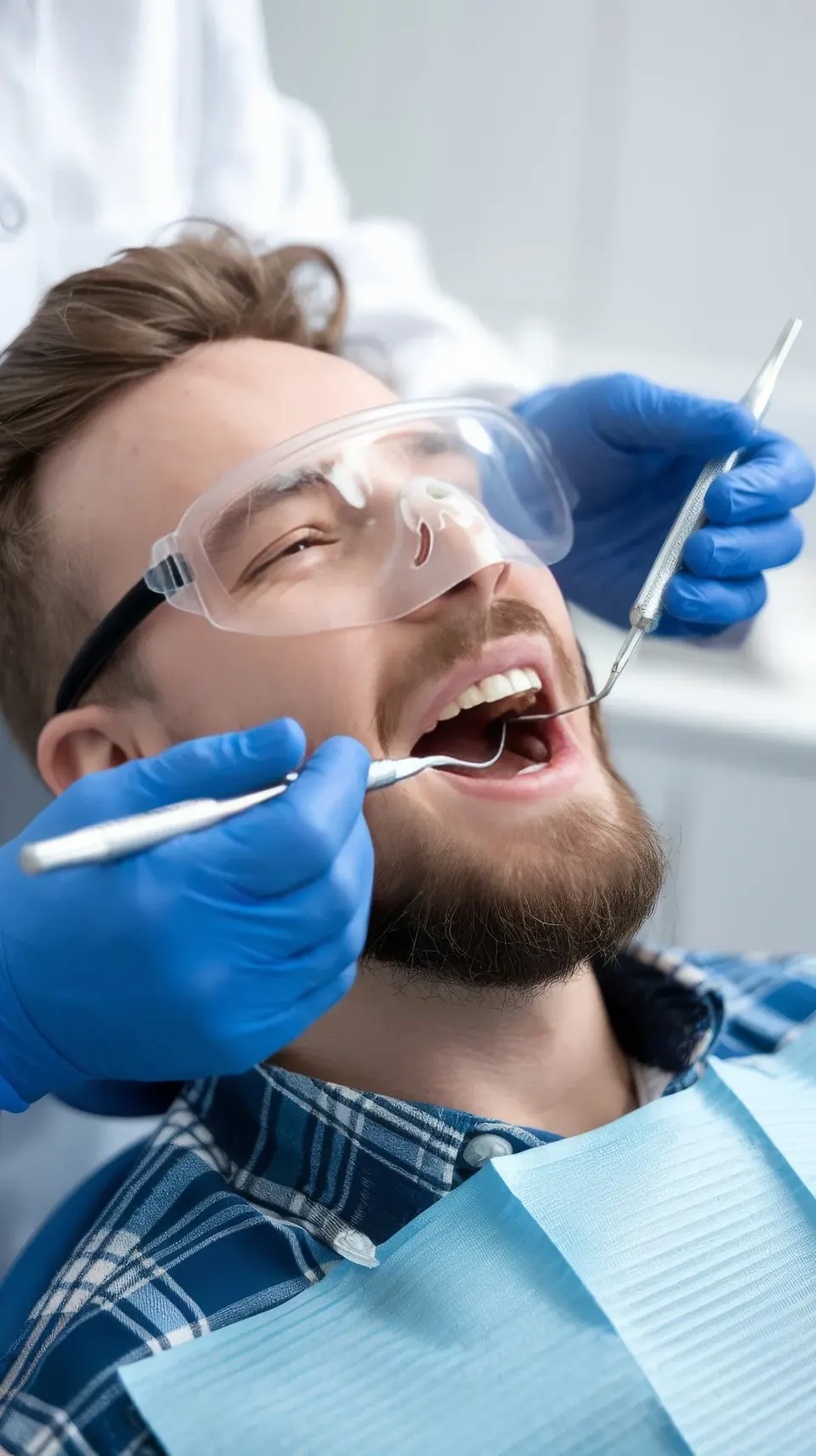
Dr. Shah surgically places the titanium implant post into the jawbone using precise guided technique under local anesthesia.
Over 3–6 months, the implant integrates with your bone. Dr. Shah monitors progress at scheduled check-in appointments.
Dr. Shah attaches the abutment connector and takes impressions to fabricate your custom porcelain crown.
Dr. Shah seats and adjusts your permanent crown, completing your smile — fully functional and natural-looking.
What the Research Shows
Dental implant surgery is one of the most well-studied and predictable procedures in modern dentistry, with published success rates exceeding 95% at 10 years. As with any surgical procedure, there are risks to understand before proceeding.Common and expected post-operative effects include temporary swelling, bruising, and mild discomfort at the surgical site, typically managed with over-the-counter pain relievers and a soft-food diet for one to two weeks. Minor bleeding in the first 24 hours is normal.
Less common risks include infection at the implant site (mitigated with prescribed antibiotics and strict oral hygiene), damage to adjacent teeth or nerves (rare when guided imaging is used for placement), and sinus involvement for upper-jaw implants placed near the sinus cavity. Dr. Shah uses 3D cone beam CT planning specifically to map these structures and minimize risk.
The most significant risk is implant failure — the implant not integrating properly with the bone. Failure rates are highest in smokers (3–5× greater risk), patients with uncontrolled diabetes, and those with significant bone loss. Identifying these risk factors before surgery and addressing them with preparatory treatment dramatically improves outcomes.
Long-term, peri-implantitis (an inflammatory condition around the implant similar to gum disease) can develop if oral hygiene lapses. Regular dental cleanings and twice-daily brushing keep this risk very low. Patients who maintain their implants with routine care report decades of trouble-free function.
The cost of dental implants in Lake Mary, FL, varies based on the number of implants needed, whether bone grafting or tooth extraction is required, and the type of restoration (single crown, bridge, or full arch). At Enclave Dental, we provide a detailed, itemized treatment plan at your consultation so you know exactly what to expect before any procedure begins.
Many dental insurance plans classify implants as a "major restorative" procedure and may cover 20–50% of the crown or abutment cost, though the implant post itself is often excluded. Our front desk team will review your specific benefits and maximize your coverage before treatment begins.
We understand that dental implants are a significant investment. We offer in-house payment plans and accept Cherry, Sunbit, and CareCredit financing, allowing you to spread the cost over 6–60 months, often with low- or no-interest promotional periods. Ask about our options during your consultation — restoring your smile should not have to wait.
Patients traveling from Sanford, Longwood, Altamonte Springs, Heathrow, Winter Springs, and Casselberry trust Enclave Dental for transparent pricing and exceptional implant outcomes. Call (407) 323-1010 or book online to schedule your implant consultation today.
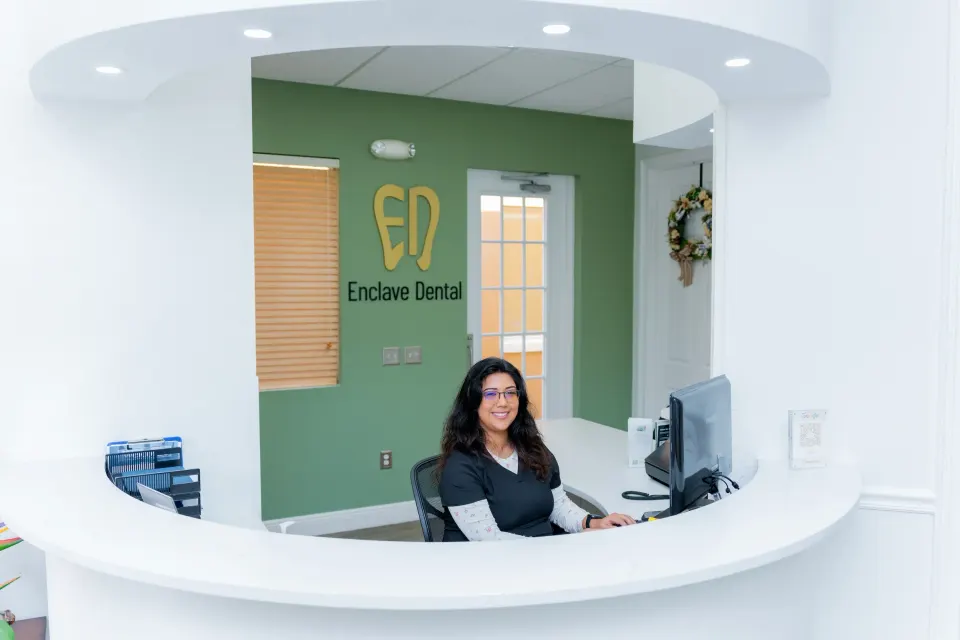
Precision. Artistry. Results.
3D cone beam CT scanning for precise implant placement planning and bone assessment
Porcelain crowns fabricated to match your natural teeth in shade, shape, and translucency
Consultation through final crown under one roof — no specialist referrals required
In-house payment plans and major third-party financing options to fit your budget
Answers from Dr. Shah
A single tooth implant including the post, abutment, and porcelain crown typically ranges from $3,000 to $5,500 at Enclave Dental. Costs vary based on whether bone grafting or extraction is needed. We offer Cherry, Sunbit, and CareCredit financing and will maximize any applicable insurance benefits at your consultation.
With proper oral hygiene and routine dental care, dental implants can last 20 years or more — often a lifetime. The titanium post has no expiration, and the porcelain crown typically lasts 15–25 years before needing replacement due to normal wear.
Implant placement is performed under local anesthesia, so you should feel pressure but not sharp pain during the procedure. Post-operative soreness is typically mild to moderate and well-managed with over-the-counter medications. Most patients are surprised by how comfortable the recovery is compared to expectations.
Most adults with missing teeth are candidates. The key requirements are sufficient jawbone volume, healthy gums, and no uncontrolled systemic conditions. Dr. Shah performs a comprehensive exam with 3D CBCT imaging to assess your candidacy precisely. Even patients with bone loss often qualify after preparatory bone grafting.
The full process takes approximately 4–8 months. Implant placement surgery is followed by a 3–6 month healing and osseointegration period, then a final appointment for crown placement. If bone grafting is needed, add 3–4 months before implant placement. Many patients find the wait worthwhile given the permanence of the result.
Coverage varies widely. Some plans cover the porcelain crown (major restorative benefit) at 20–50%, while the implant post is often excluded. Plans with implant riders may provide more coverage. Our team will review your specific benefits before treatment and help you understand exactly what is covered.