Consultation
Shachi reviews your smile goals, photographs your teeth, and performs a full oral health assessment to confirm candidacy.

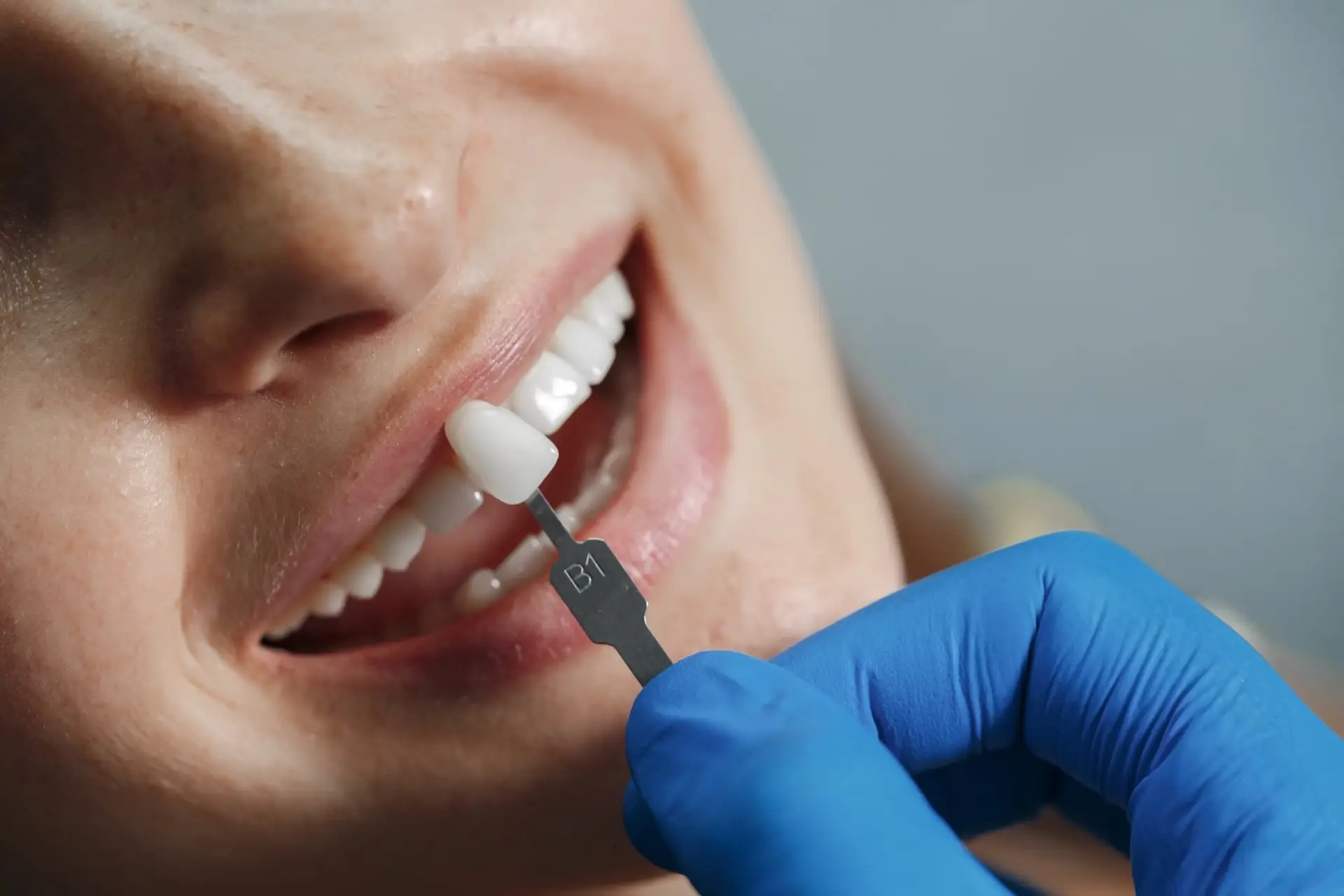
Custom porcelain shells that permanently transform your smile.
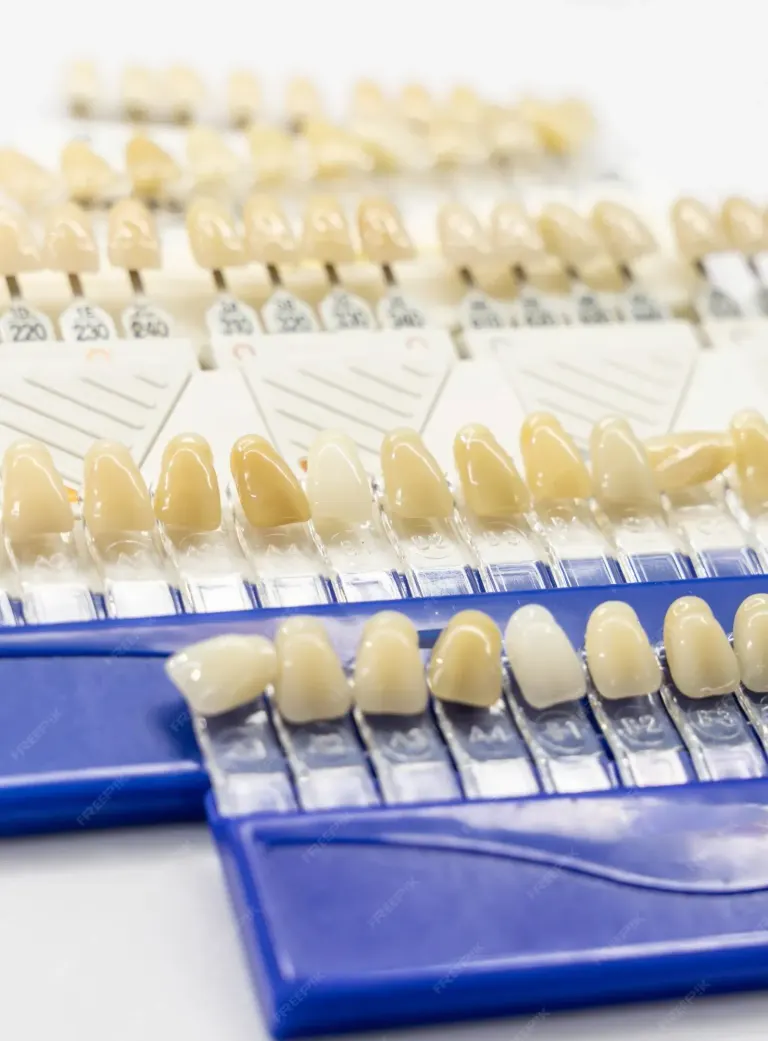
Understanding Cosmetic Tooth Imperfections
Staining from coffee, tea, and aging penetrates deep into tooth enamel — well beyond what whitening can reach. Chips from accidents, worn edges from grinding, and gaps from natural spacing leave you self-conscious in photos and face-to-face conversations. Many patients notice they cover their mouth when they laugh, avoid smiling in group photos, or feel judged in professional settings because of teeth they can't change with a toothbrush or whitening strips. These cosmetic concerns can quietly undermine your confidence every day.
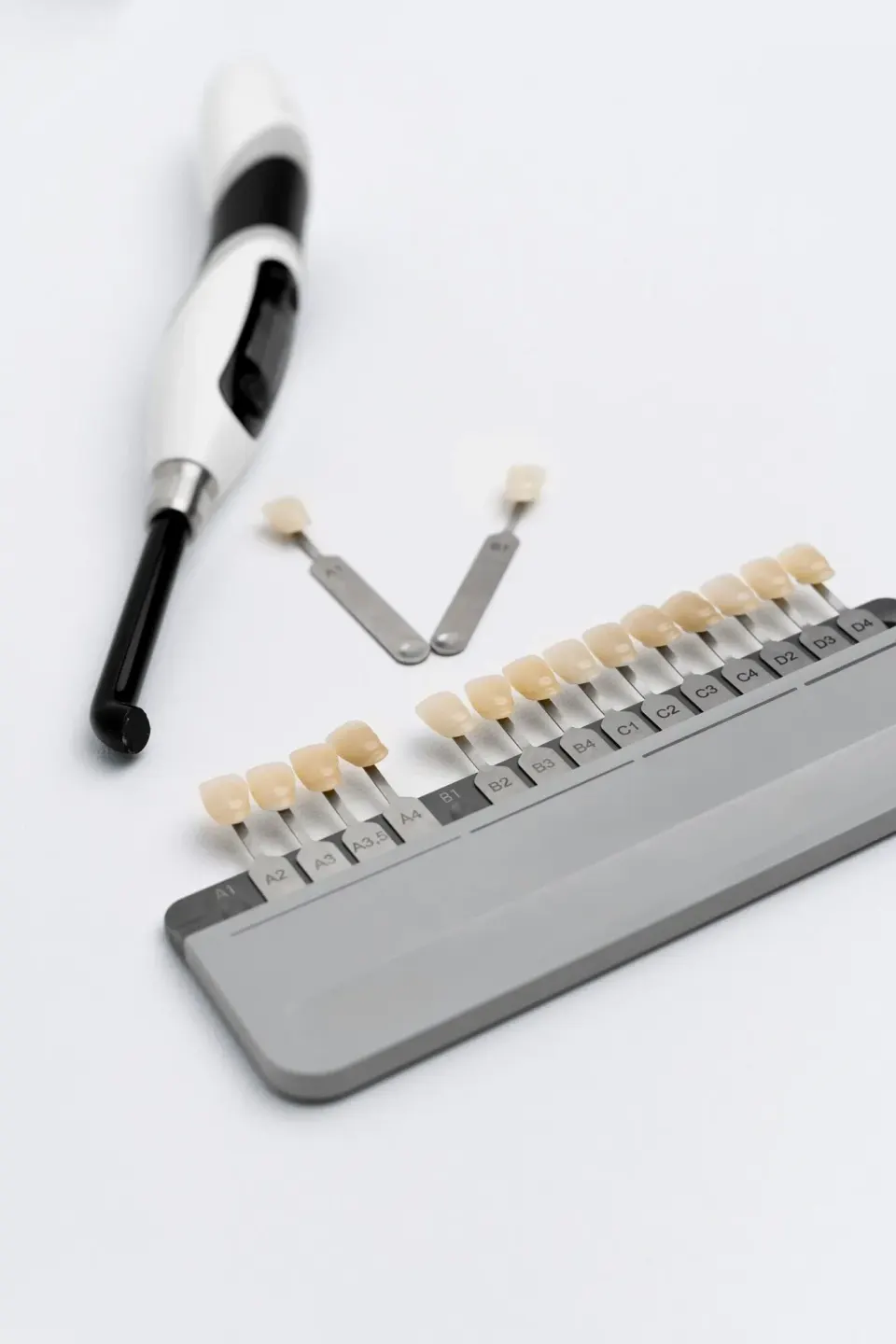
Dental veneers work by bonding a precisely shaped porcelain or composite shell directly to the front surface of each tooth. Using laboratory-fabricated custom veneers, Dr. Shachi Shah can mask deep intrinsic stains, close gaps, reshape irregular edges, and create uniform symmetry across your smile. Results are visible immediately after bonding and last a decade or more with proper care. Most patients return to normal eating and speaking the same day. The ultra-thin shells mimic natural enamel translucency for a smile that looks real — because it is.

The Science of Smile Restoration
Dental veneers are wafer-thin shells — typically 0.3 to 0.5 mm thick — made from dental-grade porcelain or composite resin that are permanently bonded to the front (labial) surface of teeth. Porcelain veneers are fabricated in a dental laboratory from high-strength feldspathic or lithium disilicate ceramic, which closely replicates the light-reflecting properties of natural enamel. They are considered a minimally invasive full-coverage cosmetic restoration and are a well-established standard of care in cosmetic dentistry.
Adhesive bonding agents chemically fuse the veneer to the underlying tooth structure after a conservative enamel reduction of 0.3–0.7 mm. This micromechanical and chemical bond produces a restoration with flexural strength exceeding 100 MPa in modern ceramics. Clinical studies report 10-year survival rates above 93% for porcelain veneers with skilled placement, making them one of the longest-lasting cosmetic dental treatments available. Composite veneers offer a more conservative, single-visit option though with a shorter lifespan of 5–7 years on average.
Lasting Results, Natural Appearance
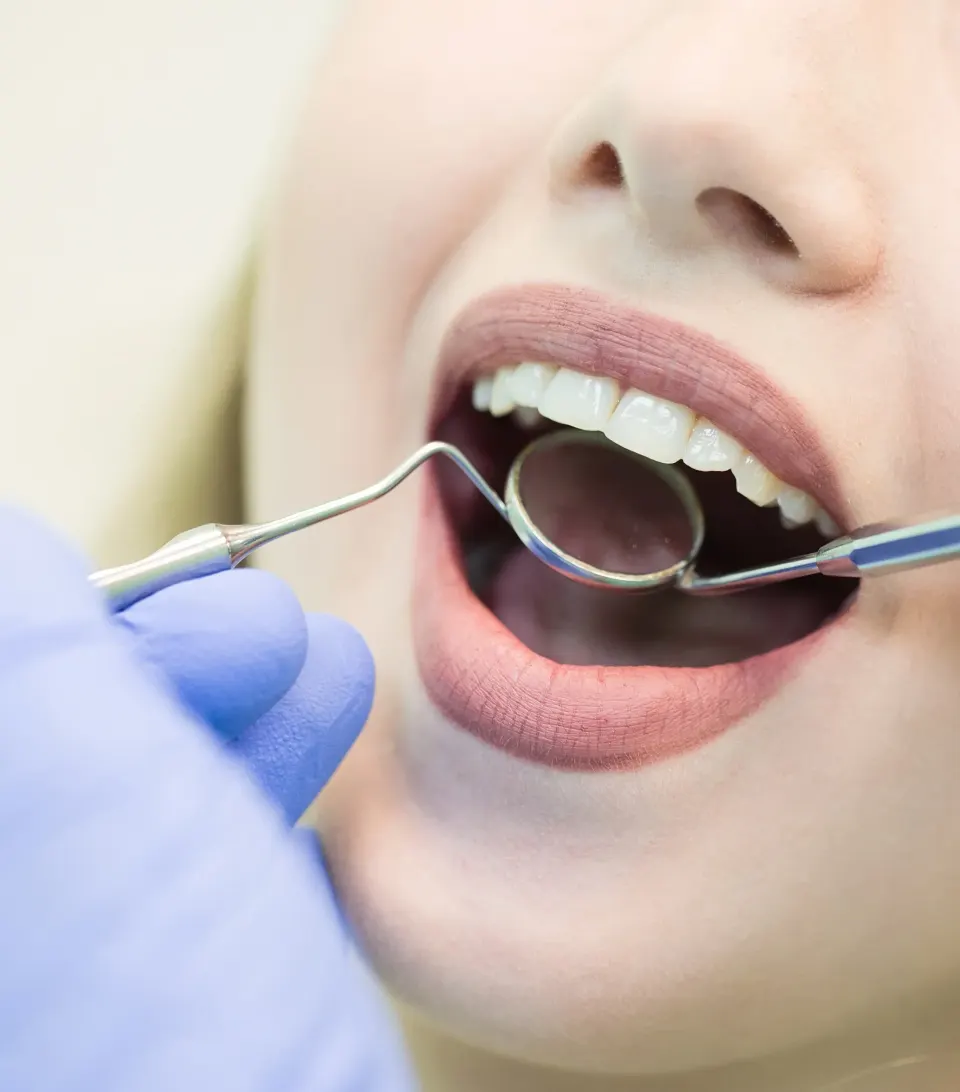
Dramatic smile improvement is visible at the final bonding appointment — no waiting weeks for results.
Porcelain veneers resist coffee, tea, and wine staining better than natural enamel over time.
High-quality porcelain veneers last 10–20 years with regular brushing and dental checkups.
Conservative enamel reduction preserves most of the natural tooth structure compared to crowns.
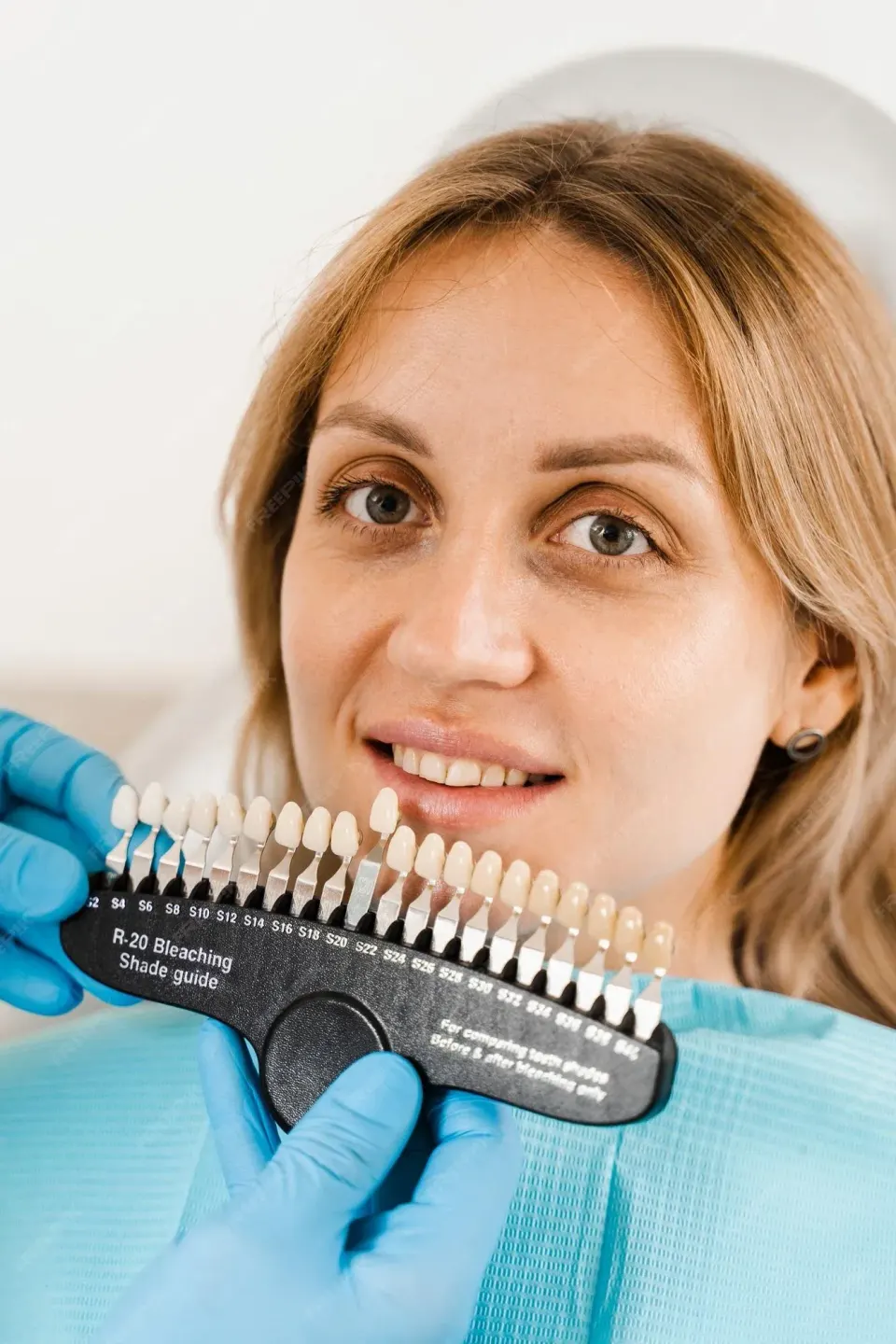
Custom shade matching and translucency mimic real enamel for a smile that looks genuinely yours.
Which Option Is Right for You?
| Treatment | Mechanism | Prep Time | Results | Duration | Downtime | Best For |
|---|---|---|---|---|---|---|
| Porcelain Veneers | Bonded ceramic shell on front surface | 2 visits + lab time | Immediate at bonding | 10–20 years | None | Multiple cosmetic concerns, staining, chips, gaps |
| Dental Bonding | Composite resin sculpted directly on tooth | 1 visit, same day | Immediate | 5–8 years | None | Single chip or small gap, budget-conscious |
| Dental Crowns | Full-coverage cap over entire tooth | 2 visits + lab time | Immediate at placement | 15–25 years | Minimal | Structurally damaged or heavily restored tooth |
Candidacy, Expectations & Contraindications
Veneers deliver the most striking results when the underlying tooth structure is healthy and the cosmetic concerns are primarily aesthetic rather than structural. The best candidates are adults who have maintained consistent oral hygiene, are free of active decay or gum disease, and have realistic expectations about the permanent nature of the procedure.
During your consultation, Dr. Shah will evaluate your enamel thickness, bite, and gum health to confirm veneers are the right fit — or recommend a more appropriate alternative such as dental bonding or a crown.
Shachi reviews your smile goals, photographs your teeth, and performs a full oral health assessment to confirm candidacy.
Shachi creates a digital smile design so you can visualize your new veneers before any tooth preparation begins.
Shachi removes a conservative 0.3–0.5 mm of enamel from each tooth and takes precise impressions sent to the dental lab.
Shachi bonds custom temporary veneers to protect your prepared teeth and give you a preview of your new smile.
Shachi permanently cements your custom porcelain veneers using light-cured adhesive resin, then polishes and adjusts the fit.
Honest, Transparent Information
Dental veneers are a safe and predictable cosmetic procedure when performed on appropriate candidates, but they involve permanent enamel removal and carry risks that every patient should understand before proceeding.
Mild tooth sensitivity to hot, cold, and sweets is the most frequently reported side effect, typically resolving within 1–3 weeks after bonding. Mild gum tenderness around prepared teeth is also common for a few days.
Veneer fracture or debonding can occur — most often from trauma, grinding, or biting hard objects. Chipped veneers are typically repairable, but severely fractured veneers may require full replacement. Over time, the cement margin at the gum line may show slight darkening, particularly if gum recession develops.
Because enamel is removed during preparation, veneers are a permanent commitment. Once prepared, the tooth will always require a veneer or crown for coverage. This is an important consideration for younger patients.
A small percentage of patients experience chronic sensitivity or pulp irritation in rare cases of deeper enamel reduction. If sensitivity persists beyond a month, Dr. Shah will evaluate whether additional treatment is needed.
Minimizing risk begins at the consultation: thorough evaluation of enamel thickness, bite force, and grinding habits allows Dr. Shah to identify patients most likely to achieve long-term success.
The cost of dental veneers in Lake Mary, FL varies based on the type of veneer, the number of teeth being treated, and the complexity of your case. At Enclave Dental, Dr. Shah provides a detailed cost estimate during your consultation after reviewing your specific goals and clinical needs.
Dental insurance classifies veneers as cosmetic, so they are typically not covered. However, if a veneer is replacing a damaged or broken tooth with a functional concern, partial coverage may apply. Our team will check your benefits before your appointment.
Enclave Dental accepts Cherry, Sunbit, and CareCredit, all of which offer interest-free promotional options to make veneers accessible. Ask our team about monthly payment plans during your consultation at (407) 323-1010.
Cosmetic Expertise in Lake Mary, FL
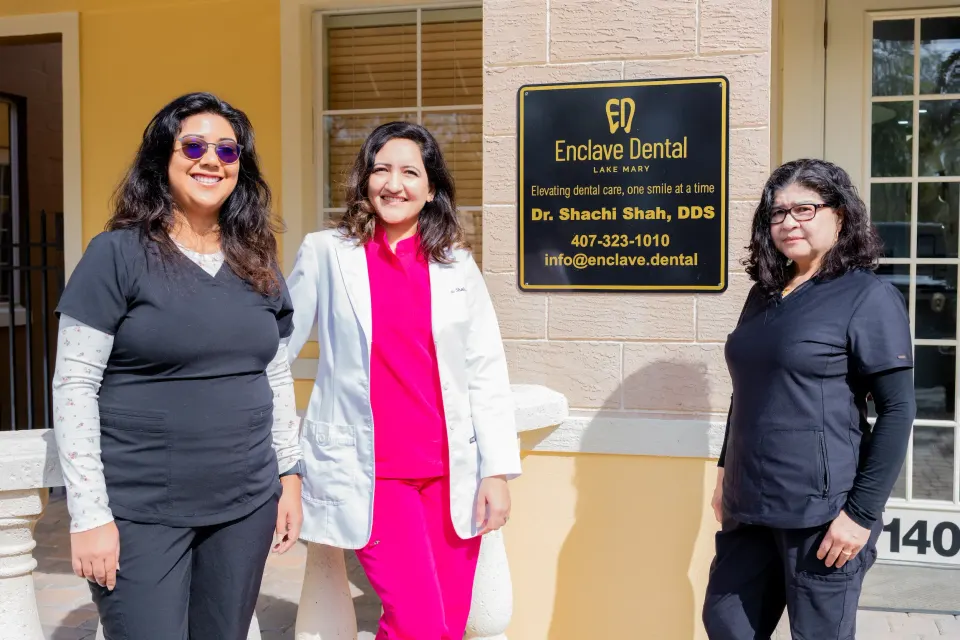
Membership in the American Academy of Cosmetic Dentistry reflects a higher standard of cosmetic training and ethics.
Patients see a digital mock-up of their new smile before any enamel is touched, removing guesswork.
Dr. Shah removes only the minimal enamel required, preserving as much natural tooth structure as possible.
Every veneer case is planned around your unique facial proportions, bite, and aesthetic preferences.
Answers From Dr. Shachi Shah, DDS
Porcelain veneers at Enclave Dental typically range from $900–$2,500 per tooth depending on the material, lab, and number of teeth treated. Composite veneers cost less ($300–$800 per tooth) but have a shorter lifespan. Dr. Shah provides a personalized quote at your consultation after reviewing your smile goals and clinical needs.
Yes — veneers require removal of a thin layer of enamel, which means the tooth will always need a veneer or crown afterward. Porcelain veneers themselves last 10–20 years with good care, but the procedure is considered irreversible. Dr. Shah discusses this fully during the consultation to make sure veneers are the right decision for you.
Veneers require a conservative reduction of 0.3–0.7 mm of enamel, which is much less than a crown. When placed by a skilled cosmetic dentist like Dr. Shah, the remaining tooth structure is healthy and protected. The bonded ceramic shell actually adds structural reinforcement to the prepared tooth.
Veneers cover only the front (visible) surface of a tooth, preserving most of the natural structure. Crowns cap the entire tooth and are used when there is significant structural damage or a large filling present. If your tooth is cosmetically imperfect but structurally healthy, a veneer is the more conservative choice.
Porcelain veneers typically last 10–20 years. Composite veneers last 5–8 years on average. Longevity depends on your oral hygiene habits, whether you grind your teeth (a night guard extends veneer life significantly), and avoiding habits like biting nails or chewing ice.
Most dental insurance plans classify veneers as cosmetic and do not provide coverage. In cases where a veneer is restoring a tooth that was fractured or functionally compromised, partial benefits may apply. The Enclave Dental team will review your insurance plan before your appointment so there are no surprises.