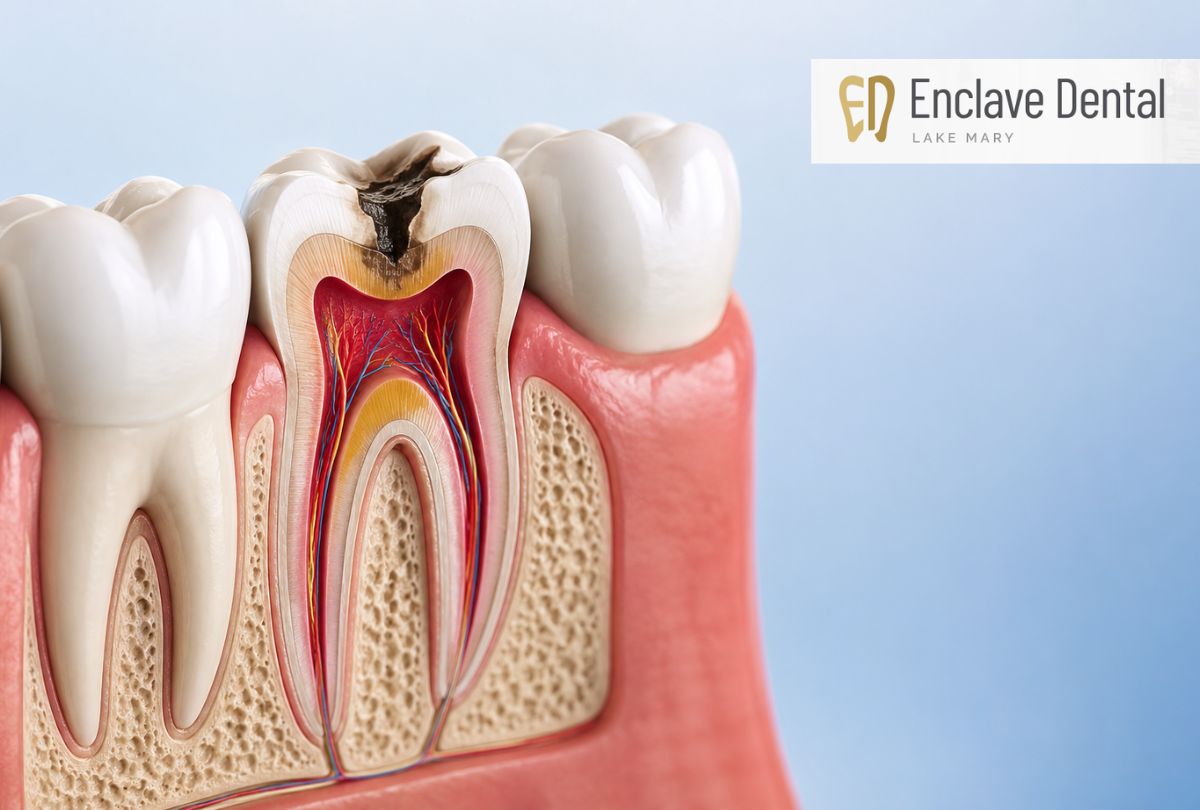
While it might seem okay at first to ignore the tooth pain, delaying treatment can allow an infection to reach deeper into the tooth and other tissues. Root canal treatment is recommended at Enclave Dental if the inner pulp of the tooth becomes inflamed or infected due to deep decay, cracks, trauma or previous dental work. A root canal is performed to remove infected tissues, disinfect the root canal system and maintain the integrity of the natural tooth structure.
Many people delay treatment as they think that the pain will go away on its own. Unfortunately, an untreated tooth infection rarely goes away on its own. The initial discomfort may gradually progress to significant pain, swelling, or even abscess formation. Also, the longer you wait, the greater the chance of tooth loss.
Recognizing the implications of delay may help patients to make decisions before issues escalate to a higher level and to a more costly treatment.
Infection Can Spread Beyond the Tooth
Tooth infection begins in the pulp chamber (where nerves and blood vessels are located). When bacteria invade this area the infection can extend into the bone and gum tissues of the surrounding area. The longer you wait, the more likely you will need more advanced tooth abscess treatment rather than just a regular root canal.
The following are signs that an infection is getting worse:
- Persistent throbbing pain
- Gum swelling or swelling of the face
- Pressure and temperature sensitivity
- A foul taste in the mouth
- Drainage or pimples around the gums
As the infection advances, the patients may suffer from increased root canal risks, including bone loss around the tooth, intense swelling, and systemic infection. The pus that accumulates around the infected root forms the abscess, often indicating urgent dental care.
If left untreated, a dental abscess may spread to the jaw or neck or other parts of the body, according to the Cleveland Clinic. If the tooth abscess treatment is done timely, it may not cause too many complications to arise and increase the likelihood of saving the tooth. Delaying will cause greater discomfort, longer procedures, and more restorative work.
The Hidden Dangers of Delaying Care
The worst mistake people make is believing that when their dental infection goes away, the issue is resolved! In fact the nerve inside the tooth may just simply have died, leaving the nerve itself inoperative. This is usually an indication that the infection has spread into adjoining structures.
Fears and anxieties may cause patients not to seek treatment for their medical conditions. When patients understand how root canal therapy saves infected teeth, they tend to have less anxiety surrounding the treatment.
An untreated tooth infection can cause more than an oral health problem. In people who have an unhealthy immune system, bacteria from a severe infection can spread to the blood and cause a more serious health problem. Late treatment also carries higher root canal risks as the infection may compromise the tooth structure and the bone surrounding the tooth.
When looking for a reputable Lake Mary dentist, individuals look for a procedure that is comfortable and ensures that natural teeth are preserved, wherever possible. Most of the time, the modern procedure for a root canal will not cause pain, but instead will ease pain, and most patients describe it as the same as getting a regular filling.
How Root Canal Treatment Helps Save Teeth
The purpose of root canal therapy is to remove infection while keeping the natural tooth. In treatment, the dentist will gently extract the unhealthy pulp from the tooth and cleanse the canals, then seal the access hole to prevent re-infection with bacteria. A dental crown is then added to provide strength and protection to the tooth, as needed, in many instances.
A typical root canal in Lake Mary might include the following steps:
| Step | Procedure |
| Examination | Digital imaging and diagnosis of infection |
| Local Anesthesia | Numbs the area for comfort |
| Cleaning the Canals | Removal of infected pulp tissue |
| Disinfection | Bacteria are eliminated from the canals |
| Filling & Sealing | Canals are sealed to prevent reinfection |
| Restoration | Crown placement if necessary |
Many potential root canal risks from advanced infection can be reduced with timely treatment. Maintaining the natural tooth helps to preserve chewing function, bite alignment and jawbone support. If the damage is too severe, however, delayed treatment might lead to extraction.
Early intervention can also help to prevent the need for emergency tooth abscess treatment in the future. Early treatment can result in faster recovery and reduced long-term treatment expenses for patients.
Preparing for Treatment and Recovery
Patients are often uneasy about undergoing a root canal, either from misinformation or concerns about pain. Learning how to prepare for a root canal can make it a more positive experience and less stressful. A dentist typically instructs patients to have a light meal before treatment, if necessary, take any prescribed medication, and refrain from chewing hard foods on the treated side after the procedure.
Most patients recover without problems. Some tenderness can be experienced for several days, particularly if the infection was severe before treatment. It’s important to follow the aftercare instructions provided carefully to reduce discomfort and aid healing.
There are some common myths about root canal procedures that patients should be aware of. A common misconception is that treatment is very painful, but in reality, it is relatively comfortable thanks to modern treatment techniques and anesthesia. Another common error is assuming that extraction is always better than saving the tooth, although saving natural teeth is always the best treatment option when possible.
Getting relief from an untreated tooth infection promptly decreases the likelihood of long term pain and extensive dental care. It also reduces the number of repeated tooth abscess treatment procedures due to recurring infection.
Long-Term Benefits of Early Root Canal Treatment
Treating dental infections quickly can avoid complications and maintain long-term oral health. Enclave Dental‘s goal with root canal therapy is to remove infection, alleviate pain and preserve natural teeth when possible. Early treatment eliminates many of the root canal risks, which can be caused by advanced tooth decay or an abscess.
If left untreated over time, patients can suffer from extraction or bone loss, or have recurring infections leading to more procedures. Correct tooth abscess treatment and root canal therapy will ensure the health of adjacent teeth and ensure the maintenance of the normal chewing function and aesthetics of the smile.
The modern dental practice can make a root canal treatment more efficient and comfortable than most people think. Early evaluation by a dental professional can help prevent complications and enhance overall treatment results when it comes to tooth pain, swelling, and sensitivity.
Frequently Asked Questions (FAQs)
What is the recovery process after root canal?
Most patients get better in a few days, but there may be some mild tenderness for a short time.
Do I need a crown following a root canal?
Many of the treated teeth will need a crown to help them stay strong and prevent cracking.
Does Enclave Dental employ modern dental technology?
Yes, at Enclave Dental, we do have advanced diagnostic tools and modern dental technology to ensure the most accurate treatment planning and patient comfort.
Is there a focus on preventive education at Enclave Dental?
Yes, patient education is an integral component of our patient care philosophy, which empowers patients to ensure their long-term oral health.

Dr. Shachi Shah a Lake Mary resident and the owner dentist at Enclave Dental, brings a wealth of expertise and a compassionate approach to every patient interaction. With years of experience in both general and cosmetic dentistry,